
by Vincent Muthee
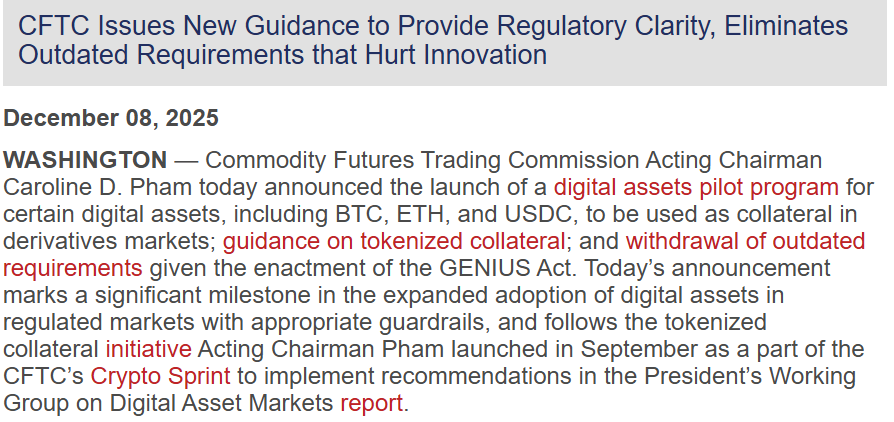
The U.S. Commodity Futures Trading Commission (CFTC) has introduced a new digital assets pilot program on December 8 that reshapes access to crypto-backed margin in regulated derivatives markets. This move allows Bitcoin (BTC), Ether (ETH), and USDC to serve as tokenized collateral in an initial three-month phase.
CFTC’s new program follows growing pressure for regulatory clarity as institutions search for compliant ways to deploy digital assets inside U.S. markets. The shift arrives days after lawmakers passed the GENIUS Act, which creates a federal structure for payment stablecoins.
CFTC Sets New Rules for Crypto Collateral
CFTC Acting Chair Caroline D. Pham unveiled the program with new guidance that supports tokenized instruments across existing futures rules. The directive replaces Staff Advisory 20-34, which previously limited the use of virtual currency inside segregated accounts. The change marks the strongest recognition yet of tokenized collateral within U.S. market oversight.

The pilot permits Futures Commission Merchants to accept BTC, ETH, and USDC as customer margin. FCMs are required to submit their weekly operational reports and reveal emerging risk concerns during the trial period. Additionally, their clearing trades across several derivatives clearing organizations must apply the strictest haircut to ensure disciplined risk exposure.
Pham framed the launch as a deliberate step toward modernized market access. “Americans deserve safe US markets as an alternative to offshore platforms,” she said during the announcement.
The framework is also applicable to tokenized real-life assets, such as U.S. Treasury bills and money market funds, which can now be used as security with established models. Tokenization capability of traditional assets enhances operational effectiveness among the companies with several collateral pools.
Industry Leaders Respond to New Framework
Major exchanges and custodial firms quickly highlighted the program’s market potential. Coinbase executives pointed to alignment with the GENIUS Act, which mandates fully backed stablecoins issued by approved entities. This combination of rules provides institutional investors with a clear route for using digital assets inside regulated systems.
Crypto.com’s leadership stressed that the new framework brings continuous liquidity into U.S. markets. The firm’s CEO Kris Marszalek said; “This means 24/7 trading is a reality in the United States.”
Coinbase Chief Policy Officer Faryar Shirzad also welcomed the move as a structural turning point for institutions seeking compliant crypto exposure. “Acting Chair @CarolineDPham and @CFTC’s decision today is a big step towards that vision and strengthens America’s position at the forefront of modernizing financial systems,” Shirzad said.
https://twitter.com/faryarshirzad/status/1998171324728885398
Broader Market Impact and What Lies Ahead
Traders anticipate quicker capital movement as companies get the greenlight to utilize crypto as margin across open positions. This change allows them to retain exposure and address requirements that enhance general liquidity. Most of them are already monitoring price adjustments as confidence increases with the new structure.
The Tokenized Treasuries also receive a new re-evaluation as companies check on wider collateral baskets. These instruments narrow down settlement times and enhance quicker capital rotation across various pools. However, asset managers will perform controlled trials prior to rolling out larger positions.
CFTC teams will analyze all the stages of the trial to learn about market behavior. Officials will track volatility, collateral flows, and operational demands across participating firms. Results will decide how the agency shapes long-term rules for tokenized assets.
Market analysts believe the pilot gives U.S platforms a real advantage. The structure offers strict oversight with enough flexibility for active trading desks. Firms will now watch early data to judge how the system performs under heavier volume.
#blockchain #crypto, #decentralized, #distributed, #ledger